
How often should you repaint a house in Arizona?
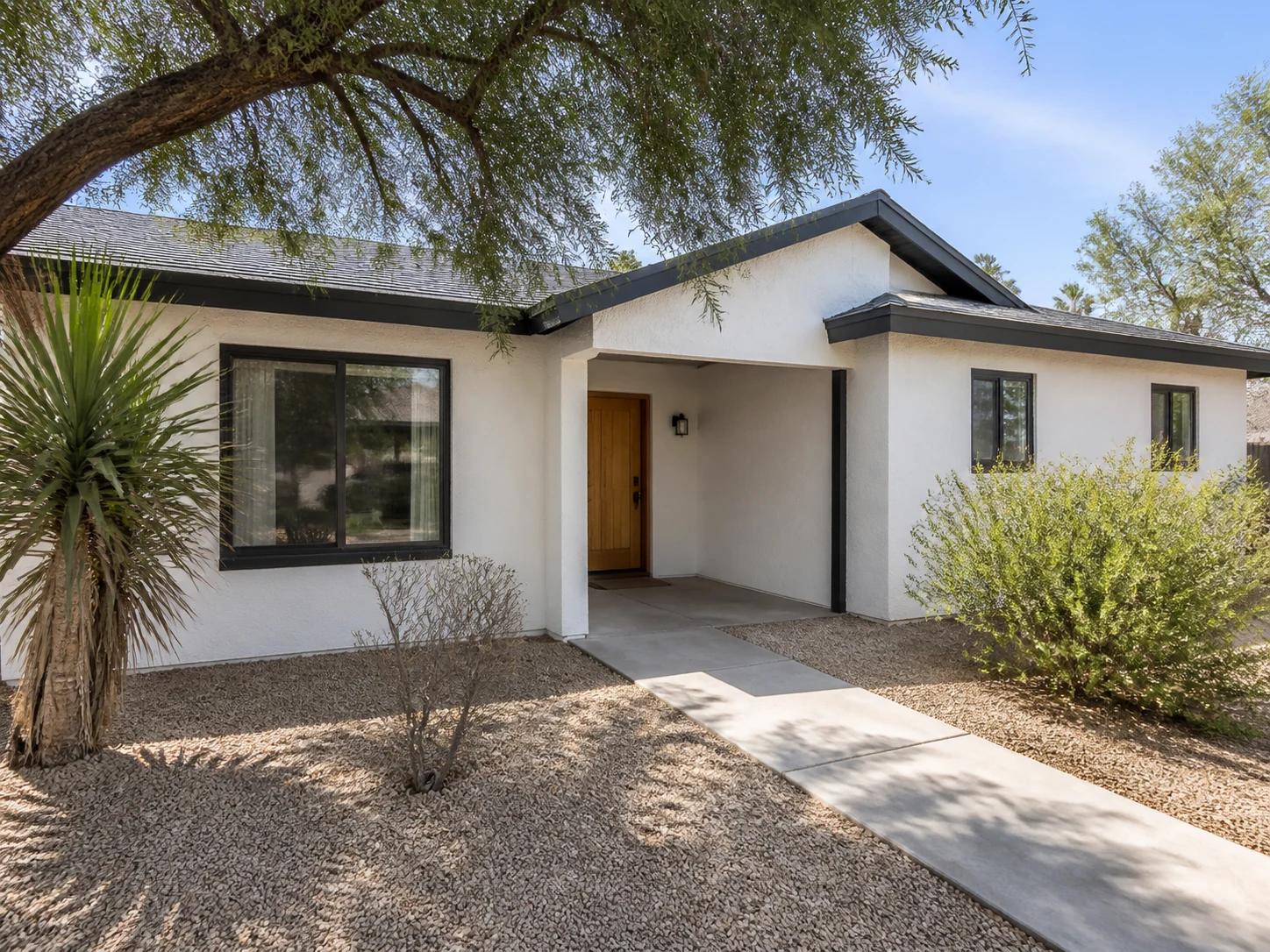
How often should you repaint a house in Arizona? The short answer most Phoenix homeowners are looking for is every 7 to 10 years for stucco exteriors, and every 5 to 7 years for interior walls. But after quoting repaints across the Valley, the honest answer we give people at the door is that your house doesn't age all at once. The south and west walls chalk and fade years before the shaded ones, so "how often" is really a question of which wall you're standing in front of. This guide breaks down the real intervals we see on our repaint bids, surface by surface, so you can time the job right instead of guessing.
How often should you repaint your house in Arizona?
For a typical stucco home in Greater Phoenix, plan on repainting the exterior every 7 to 10 years, with the south and west elevations often needing attention on the shorter end of that range. Interior walls generally run 5 to 7 years before they look tired. Those are the intervals we build most Valley repaint bids around, and the deciding factor isn't the calendar, it's UV exposure and prep quality on the last coat.
The reason there's a range instead of a fixed number comes down to what the Arizona sun does to a finish. Paint holds its color and its protective film for a set amount of UV exposure, not a set amount of time. A wall that bakes in direct summer sun burns through that budget fast. A shaded north wall barely touches it.
On a lot of the repaints we bid, the south and west walls look a decade older than the north side of the exact same house.
That's why we tell homeowners to think in cycles per elevation, not one number for the whole house. When the sun side finally chalks out, that's your signal, and our exterior repaint process is built to coat those exposed walls so they hold color instead of fading first all over again.
Why does paint fade faster on the sun side in Arizona?
It comes down to ultraviolet radiation. Phoenix gets some of the most intense, sustained UV exposure in the country, and UV is what breaks the resin binders in paint apart at a molecular level. As those binders degrade, pigment loosens and lifts off the surface as a fine powder. Rub your hand on a south-facing wall that's due, and you'll see chalk on your palm. That's the finish literally giving up.
The elevations that go first
The south and west walls take the brunt of it because they catch the longest, hottest hours of direct sun, especially through the summer. Here's the pattern we see on nearly every whole-house exterior bid in the Valley:
- West-facing walls take the worst beating. Afternoon sun in July and August is brutal and hits them at full strength for hours.
- South-facing walls are close behind, exposed to sun most of the day year-round.
- East-facing walls get morning sun but cool off in the afternoon, so they age slower.
- North-facing walls stay largely shaded and often look nearly new when the sun sides are chalking.
Monsoon season adds a second problem on top of the UV. From roughly July through September, driving rain and blowing dust work into any hairline stucco crack, and that trapped moisture pushes paint off from behind. A finish already weakened by a summer of sun is exactly what a monsoon storm peels first.
How often to repaint exterior stucco in Phoenix
Plan on repainting exterior stucco every 7 to 10 years in Phoenix, assuming the last job was prepped and coated properly. Rushed prep can cut that in half. Stucco is on most Valley homes, and it has its own failure mode beyond fading: cracks. Heat expansion swells the wall through the day and contracts it at night, and monsoon moisture works those hairline cracks open a little wider every season.
Painting over an unrepaired stucco crack just seals the problem for one summer, and it reopens the next. That's why we handle stucco crack repair before the repaint, as one job with one crew, so the patch blends into the texture instead of telegraphing through the fresh coat.
What actually determines your stucco interval
The 7-to-10-year range moves based on a few real factors we assess on site:
- Sun exposure. A home with big unshaded south and west walls trends toward the shorter end.
- Prep on the last coat. If the previous painter skipped washing off the chalk or didn't prime the bare spots, the finish had nothing to grip and fails early.
- Color. Deeper, more saturated colors show fade sooner than lighter, warmer tones common on Valley stucco.
- Crack maintenance. A wall whose cracks were caught and repaired holds its coat far longer than one that's been quietly splitting for years.
Signs your Phoenix house needs repainting
You don't need a calendar to know it's time. The house tells you. These are the signs we point out to homeowners during an estimate, and any one of them on a sun-facing wall usually means the clock has run out.
- Chalking. Run your hand along the wall. If it comes back dusty with pigment, the binder has broken down and the finish is no longer protecting the surface.
- Uneven fading. If your south and west walls look noticeably lighter or duller than the shaded sides, the sun side has burned through its coating first. This is the most common tell in the Valley.
- Peeling or flaking. Paint lifting in sheets or flakes means it lost adhesion, usually from skipped prep or moisture behind the coat. This won't fix itself.
- Visible stucco cracks. Hairline cracks that have opened up are letting monsoon moisture in behind the paint. Repair and recoat before they spread.
- Faded, tired interior walls. Inside, scuffs that won't wash out, yellowing near the kitchen, and a color that just looks flat are the signals a room is past due.
If it chalks on your hand or it's peeling in more than one spot, it's time. If it's only light fade on a single wall and your last quality repaint was recent, you may just need a touch-up.
That last part matters. We'll tell you in person if you don't need the whole-house job yet, because talking a homeowner into a repaint they don't need is not how we run. Owner Cody Novak comes out and quotes the work himself, walks every elevation, and gives you a straight read on whether it's time. Bonded and insured, every estimate free. Call or text (715) 223-7083 and we'll come look before we quote.
How often should you repaint interior walls in Arizona?
Interior walls generally need repainting every 5 to 7 years, though it varies more by room than by the calendar. High-traffic spaces wear faster than a guest room nobody uses. Arizona's dry indoor air is actually gentle on interior paint compared to humid climates, so most of what drives an interior repaint here is living, not weather: scuffs, hand marks, kitchen grease, and simply getting tired of the color.
Kitchens and bathrooms tend to be first, since moisture and cooking film build up on the walls. Hallways and stairwells scuff from daily traffic. Bedrooms and formal spaces can go a good while longer. When you're ready, our interior repaint process covers protecting the space, prepping the walls, and cutting clean lines so the finish looks right in Phoenix light.
Repaint intervals at a glance
Here's the quick reference we come back to when a homeowner asks how often to repaint. Treat these as Valley-specific starting points, not guarantees, since your sun exposure and last paint job shift them either way.
| Surface | Typical Phoenix interval | What shortens it |
|---|---|---|
| Exterior stucco (sun side) | Closer to 7 years | Direct west and south UV, deep colors |
| Exterior stucco (shaded) | Up to 10 years or more | Rarely the limiting factor |
| Wood trim and fascia | 4 to 6 years | Wood moves with heat, so paint cracks sooner |
| Metal (garage doors, railings) | 5 to 8 years | Sun-baked metal gets hot enough to stress the coating |
| Interior walls | 5 to 7 years | Traffic, kitchens, and baths, not weather |
| Wood fence | 2 to 4 years | Full sun and no shade at all, all day |
Notice that wood trim and fascia run shorter than the stucco body. Wood expands and contracts with the heat more than stucco does, so the paint film on trim cracks and lifts sooner. It's common to repaint trim once between full-body repaints, which keeps the whole exterior looking sharp without doing the entire house early.
Time the job before the sun forces your hand
The real cost of waiting isn't just a faded house. Once a coat fully breaks down, the sun and monsoon moisture start working on the surface underneath, which means more prep and more stucco repair on the next job. Catching a repaint at the right point in its cycle is the cheapest version of the work. We walk every elevation, tell you honestly which walls are ready and which can wait, and quote it in person so the number reflects your actual house. Call or text (715) 223-7083 or get in touch for a free estimate.
Frequently asked questions
How often should you repaint interior walls in Arizona?
Interior walls in Arizona generally need repainting every 5 to 7 years, though it depends more on the room than the calendar. Arizona's dry indoor air is gentle on paint, so wear comes from living rather than weather. High-traffic spaces like hallways, kitchens, and bathrooms show scuffs, grease, and moisture film first, while bedrooms and formal rooms can go longer. Repaint when the walls look tired, scuffs won't wash out, or you're simply done with the color.
How often should you repaint a wood fence in Arizona?
A wood fence in Arizona usually needs repainting or restaining every 2 to 4 years, the shortest interval of anything on the property. A fence sits in full, unshaded sun all day with no eaves or overhangs to protect it, so UV breaks the finish down fast. Watch for fading, graying wood, and a finish that no longer beads water. Catching it before the wood dries out and splits makes the recoat far easier and helps the fence last.
How often should you repaint a house in Arizona?
For most Phoenix homes, plan on repainting the stucco exterior every 7 to 10 years, and often sooner on the south and west elevations that take direct summer sun. Interior walls run about 5 to 7 years. The house won't age evenly: the sun-facing walls chalk and fade a full cycle before the shaded ones. Watch for chalk that rubs off on your hand, uneven fading between walls, and peeling around stucco cracks. Those are the signs the coating has given up its UV protection and it's time.
Why does paint fade faster on the sun side of a house in Arizona?
Paint fades faster on the south and west walls because those elevations catch the longest, most intense hours of direct Arizona sun. Ultraviolet radiation breaks down the resin binders that hold pigment in place, and once those binders degrade the color loosens and lifts off as a fine chalk. West-facing walls take the worst of it from brutal afternoon summer sun, followed by south-facing walls. North walls stay shaded and often look nearly new while the sun sides are already chalking out.
How often should you repaint exterior stucco in Phoenix?
Repaint exterior stucco every 7 to 10 years in Phoenix when the last job was prepped and coated properly. Rushed prep can cut that in half. Beyond fading, stucco develops cracks from heat expansion and monsoon moisture, and painting over an unrepaired crack just seals the problem for a season before it reopens. The interval shortens with heavy sun exposure, deep colors, and skipped prep on the previous coat. Repairing the cracks before the recoat is what makes the finish actually last.