Here's how a Novak varnishing job actually runs, so you know what you're paying for and why a good clear coat is mostly prep, not the final pass.
1. Look at the piece and quote in person. Cody checks the wood, the old finish, and how much sun the surface takes, then sorts whether it wants a clear varnish, a stain-and-seal, or a repaint. That in-person read is what the number is built on, not a guess over the phone.
2. Strip and clean the old finish. A failing clear coat has to come off before a new one goes on, or the new finish just fails with the old one underneath. We strip or sand off the tired finish and clean the surface so the clear coat bonds to the wood, not to the past.
3. Sand back to sound wood. We sand through the grits to level the surface, knock down checks and rough grain, and open the wood so it takes the finish evenly. Skipping grits is why a lot of DIY clear coats dry blotchy or cloudy.
4. Mask, control dust, and seal the area. A clear finish shows every speck. We protect the surrounding surfaces, keep dust off the wet coat, and set the piece up so nothing lands in it while it cures.
5. Build the clear coat in thin, even passes. We lay the varnish in multiple thin coats rather than one heavy one, sanding lightly between passes, so it builds clear and smooth instead of running, clouding, or trapping bubbles.
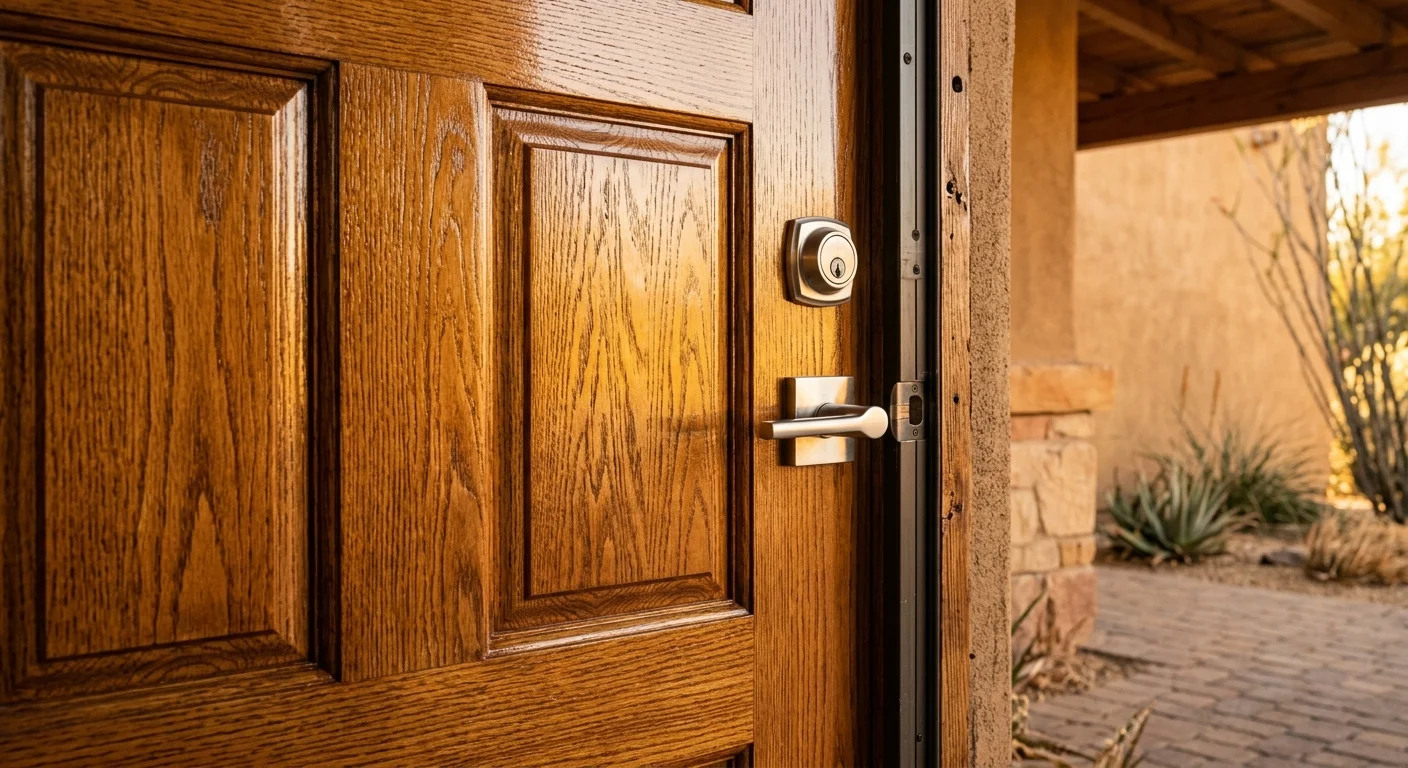
6. Match the sheen and check it in daylight. Wood finishes run from matte to high gloss, and the wrong sheen looks as off as the wrong color. We match the sheen to the piece and the rest of the room, then look at it in real light, at an angle, before we call it done.
On cost: a varnishing job is quoted on the actual piece, because what moves the number is the surface, its condition, and its exposure. How much old finish has to come off, how much sanding and repair the wood needs first, how many coats the exposure calls for, and whether it's an interior piece or a sun-hit exterior one all change the scope. That's exactly why the estimate is free and done in person. Get a free quote and we'll scope it off the actual wood.